
News
What Is Machine Vision? A Practical Guide to Industrial Camera Systems
What Is Machine Vision?
Machine vision is the use of cameras, optics, and image-processing software to give manufacturing equipment the ability to "see" and interpret what's happening on a production line. Instead of a person visually checking parts for defects or verifying that a label is correctly positioned, a machine vision system captures an image, analyzes it against defined criteria, and makes a pass or fail decision in milliseconds.
At its core, the technology combines optics, a camera or sensor, and software running detection, measurement, or identification algorithms. It's a branch of industrial automation that's related to, but distinct from, general computer vision — it's built specifically for repeatable, high-speed decisions on a factory floor rather than open-ended interpretation of images.
Because it operates faster and more consistently than a human inspector, machine vision has become a standard part of quality control across most manufacturing sectors, from automotive assembly to pharmaceutical packaging.
How a Machine Vision System Works
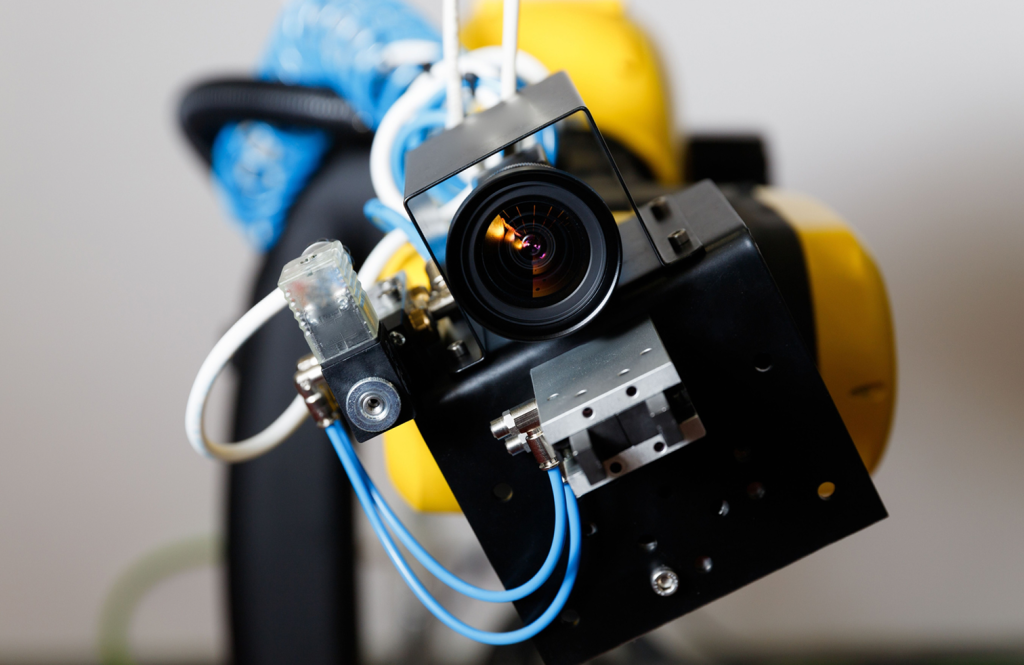
A machine vision system is built from several components working together, and each one affects the accuracy of the final result. The camera captures the image; the lens focuses it; lighting controls contrast and removes shadows or glare that could hide a defect. The captured image is then sent to a processor — either built into the camera itself, in a smart camera, or an external industrial PC — where software analyzes it.
The software layer applies algorithms for edge detection, pattern matching, measurement, optical character recognition, or barcode decoding, depending on the task. The result is compared against a threshold or reference model, and the system outputs a decision: accept, reject, or flag for review. That decision can trigger a mechanical action, such as diverting a faulty part off the line, or simply log data for traceability.
Getting this chain right — camera, lighting, lens, and software — matters more than any single component in isolation, which is why system design usually decides whether an inspection works reliably in practice.
Industrial Camera Systems: The Core Hardware
Industrial camera systems are purpose-built for continuous factory use, which sets them apart from consumer or lab-grade cameras. They're designed for a fixed field of view, stable frame rates, and long-term reliability in environments with vibration, dust, and temperature swings that would affect an ordinary camera.
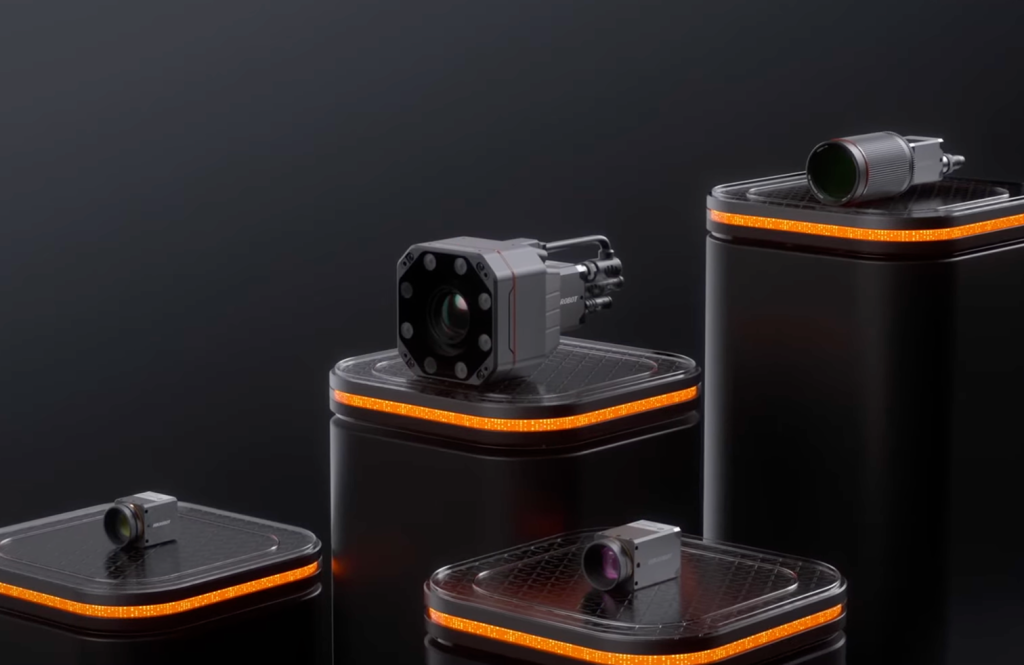
Two main camera types make up most industrial camera systems: area scan cameras, which capture a full 2D image in one exposure and suit most inspection tasks, and line scan cameras, which capture one line of pixels at a time and are used for continuous materials like textiles, film, or metal coils moving past the lens. Hikrobot's area scan camera series illustrates the range well, spanning several sub-series built for different resolution and speed requirements.
Interfaces matter as much as sensor quality. GigE, 10GigE, USB3, Camera Link, and CoaXPress each offer different trade-offs between cable length, bandwidth, and cost, so the right choice depends on frame rate and resolution requirements.
Machine Vision Technology: Lighting, Lenses, and Software
Cameras get most of the attention, but machine vision technology depends just as much on the components around them. Lighting is often the single biggest factor in inspection accuracy: ring lights, backlights, and dome lights each reveal different surface features, and the wrong choice can make a real defect invisible or create false rejects from shadows and reflections.
Lenses determine field of view, depth of field, and working distance, and need to be matched to both the sensor size and the part being inspected. On the software side, modern systems increasingly combine traditional rule-based algorithms with deep-learning models, which handle variable or cosmetic defects — like inconsistent surface textures — that are hard to define with fixed rules alone.
Together, these elements determine whether a system holds up on a fast-moving line, not just performs well in a demo.
Industrial Machine Vision Applications
Industrial machine vision applications span nearly every stage of production, not just final inspection. Common uses include:
- Quality and defect inspection — detecting scratches, cracks, missing components, or incorrect assembly before parts leave the line.
- Dimensional measurement — checking that parts meet tolerances without contact gauges.
- Guidance and positioning — helping robotic arms locate and pick parts accurately, even when randomly oriented.
- Code and character reading — decoding barcodes, QR codes, and text for traceability and sorting.
- Presence and completeness checks — confirming that all components, labels, or fasteners are in place before packaging.
These applications appear across automotive, electronics, semiconductor, food and beverage, pharmaceutical, and logistics operations — industries where even a small defect rate translates into significant cost, recalls, or safety risk. The specific mix on a given line usually depends on part complexity and throughput speed, which is why system specification tends to be project-specific rather than one-size-fits-all.
Machine Vision Inspection Systems and Automated Visual Inspection
Machine vision inspection systems are the most widely deployed category of industrial vision, since quality control is where the return on investment is easiest to measure. Automated visual inspection replaces or supplements manual checks with a camera-based process that runs at line speed, applies the same criteria to every unit, and logs the result for every single item, not just a sample.
This consistency is the main advantage over manual inspection. Human inspectors get tired, miss subtle defects during long shifts, and can be inconsistent between operators, whereas a properly configured machine vision inspection system evaluates every part against the same reference every time. It also generates data — reject rates, defect types, and trends over time — that can feed back into process improvement rather than just catching bad parts after the fact.
That said, automated visual inspection isn't a universal replacement for human judgment. It works best for well-defined, repeatable checks and needs to be re-validated whenever a product design changes.
Choosing Machine Vision Cameras for Your Line
Selecting machine vision cameras starts with the application, not the spec sheet. Resolution needs to match the smallest defect or feature you need to detect, and frame rate needs to match line speed — oversizing either adds cost without adding value. Sensor type, shutter type (global shutter avoids motion blur on moving parts), and interface all follow from those two decisions.
Environmental factors matter too: IP-rated housings for washdown areas, or a wide operating temperature range for outdoor or high-heat processes. It's usually worth prototyping with a small setup before committing to a full-line rollout, since lighting and mounting conditions rarely match perfectly on paper.
Frequently Asked Questions
Is machine vision the same as computer vision?
They're related but not identical. Computer vision is the broader field of teaching computers to interpret images. Machine vision applies that field specifically to industrial tasks — inspection, measurement, guidance — usually with dedicated hardware and real-time performance requirements.
Do I need a smart camera or a separate processor?
Smart cameras integrate the sensor and processor in one housing, which simplifies setup for a single inspection point. A PC-based system with a separate industrial camera is usually better when you need higher processing power, multiple cameras, or more complex software.
How much does a machine vision system cost?
Costs vary widely depending on camera resolution, lighting, lens quality, and software complexity, so it's best addressed on a project basis rather than as a flat figure.
Can machine vision detect defects that are hard to define, like cosmetic flaws?
Yes, though it typically requires deep-learning-based software rather than purely rule-based algorithms, since cosmetic defects tend to vary in shape and appearance.
Final Thoughts
Machine vision has moved from a specialist tool to a standard part of industrial automation, largely because the components involved — cameras, lighting, lenses, and software — have become more capable and easier to integrate. Getting a system right still depends on matching hardware to the specific application rather than choosing the highest-spec camera available. For manufacturers evaluating a first deployment or expanding an existing inspection line, working with an authorized Hikrobot distributor who can advise on camera selection, lighting, and interface compatibility tends to shorten the path from concept to a reliable, working system.