
Electronics industry
Electronics Automation Solutions
Short answer: Electronics industry automation uses machine vision, robots and cobots to inspect, identify, assemble and move small, delicate parts with consistent quality. Hikrobot cameras and code readers handle inspection, counting, traceability and robot guidance. JAKA cobots handle loading, screwdriving, assembly, gluing, grasping, inspection and sorting.
Why Does Automation in the Electronics Industry Matter?
Electronic products are small, varied and change often. A scratch on a display, a missing insert or an unreadable code is hard to catch by eye, especially at speed. Electronic automation answers this with cameras that do not tire and robots that repeat a motion exactly.
Automation in the electronics industry is already at scale. The International Federation of Robotics reports that electrical and electronics was the largest customer industry for industrial robots in 2024, with 128,899 units installed and a 24% share of all installations. That makes robotics in electronics manufacturing a mainstream choice rather than an experiment.
Which Brands Can You Use for Electronics Automation?
ELVOTEC integrates several brands that cover the main tasks in electronics automation systems:
- Hikrobot: machine vision for inspection, counting, guidance and code reading.
- JAKA: collaborative robots for repetitive handling, assembly and inspection work.
- DH-Robotics: electric grippers for small parts.
- SDKELI and Akusense: safety lidar and light curtains for guarding the cell.
Automation in electrical engineering and electronics covers four jobs. The table shows which technology fits each.
|
Job |
Typical technology |
|---|---|
| Find defects and verify parts | Hikrobot area scan and smart cameras |
| Identify and trace parts | Hikrobot smart code readers |
| Guide a robot to the part | Hikrobot cameras with vision software |
| Move, fit, fasten, dispense or sort | JAKA cobots, with DH-Robotics grippers |
New to the technology? Start with what machine vision is.
Machine Vision Applications in Electronics Industry
Machine Vision for Electronics means cameras and software that check small parts and decide pass or fail automatically. The five cases below draw on Hikrobot application documents and Hikrobot’s electronics overview, as reported by TimesTech. For the quality side, see how machine vision improves quality control.
How Does Machine Vision Inspect Displays and Test Illumination?
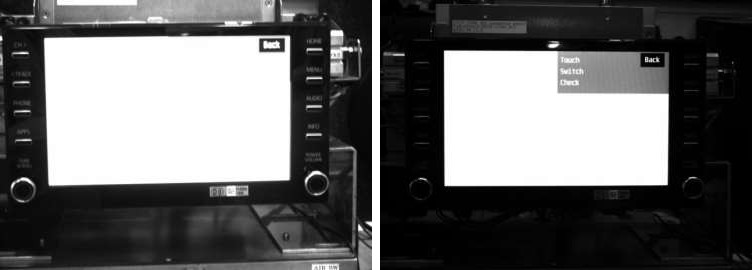
Task: A camera images the display unit, finds scratches, lines and bubbles, and checks that the buttons light up correctly. Hikrobot’s case uses its VisionMaster software with a blob tool for defects and an intensity tool for button illumination.
Requirements:
- Inspect the display for scratches, lines and bubbles.
- Test the light illumination of the buttons.
- Cover the entire part.
- Work at a very small working distance.
Solution:
- MV-CE060-10UM: the camera used in Hikrobot’s display case, running VisionMaster.
It belongs to the area scan cameras range. At short working distances, lighting matters as much as the camera, so check the light sources and controllers too.
How Does a Smart Camera Inspect Phone Back Cover Inserts?
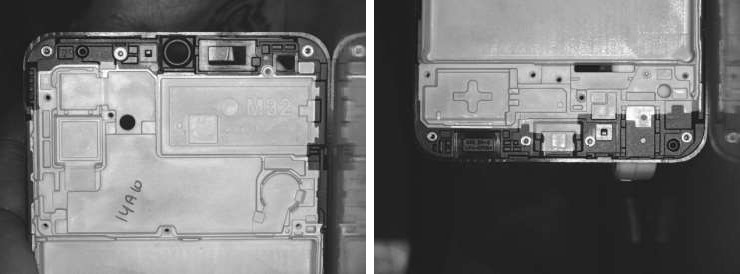
Task: The smart camera checks the inserts on a mobile phone back cover. It sees the whole part and works at a larger distance from it.
Requirements:
- Inspect the inserts on the back cover.
- Keep a larger working distance.
- Cover the whole part in the image.
Solution:
- MV-SC2016PM: Hikrobot’s camera for this case.
Hikrobot lists these advantages: the camera and lens can be replaced flexibly, several solutions can be saved for different models, and multiple communication protocols are available for PLCs and other third-party interfaces. See the smart camera range.
How Does a Smart Camera Count and Classify Small Components?

Task: The camera finds each small component, counts them and classes them as OK or NG. Hikrobot shows this as “classification and counting in consumer electronics” for its SC3000 and SC3000X series.
Requirements:
- Count and classify mixed small parts in one image.
- Catch missing, extra or wrong parts at a single station.
- Change over quickly when the product changes.
- Let technicians without AI expertise set it up.
Hikrobot’s registration learning mode needs only 2 to 10 images and 1 to 3 minutes of learning. Deep learning typically needs hundreds to thousands of images and hours to days of training.
Solution:
- SC3000 and SC3000X series: more than 30 detection algorithms, including presence/absence, position, size, defect inspection and code reading.
- SC6000 series: an AI smart camera with 6T computing power and over 140 vision tools, for more complex tasks.
If you are unsure whether a smart camera fits, read what a smart camera is.
How Does Machine Vision Read Codes on Small Electronic Parts?
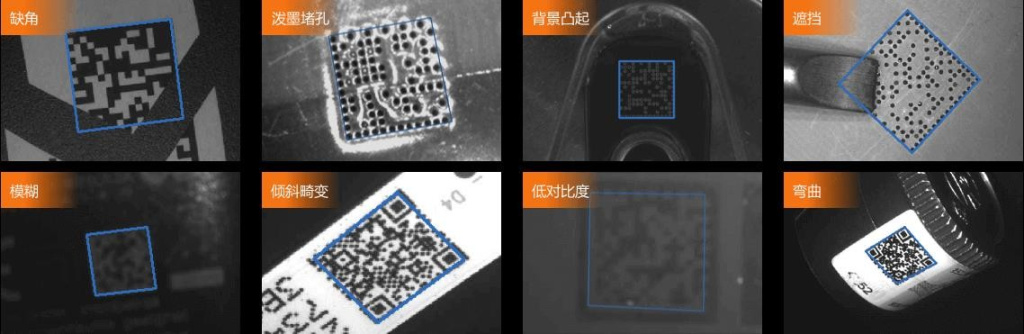
Task: A code reader decodes Data Matrix and QR codes on modules and parts, so each unit links to its record. Hikrobot notes that miniaturization is pushing manufacturers from contact printing to non-contact laser marking, and that phone modules often lack fixed features.
Requirements:
- Read QR and Data Matrix codes on many module types.
- Handle difficult, laser-marked codes.
- Read several codes in one wide image where needed.
- Pass the data on for traceability.
Solution:
- MV-ID3016XM, MV-ID3030XM and MV-ID3050XM: compact readers with a deep-learning chip for difficult codes.
- ID5000 series: up to 20 MP resolution, reads multiple codes at once and accepts an external light and C-mount lens.
How Does Machine Vision Guide Electronics Assembly and Positioning?
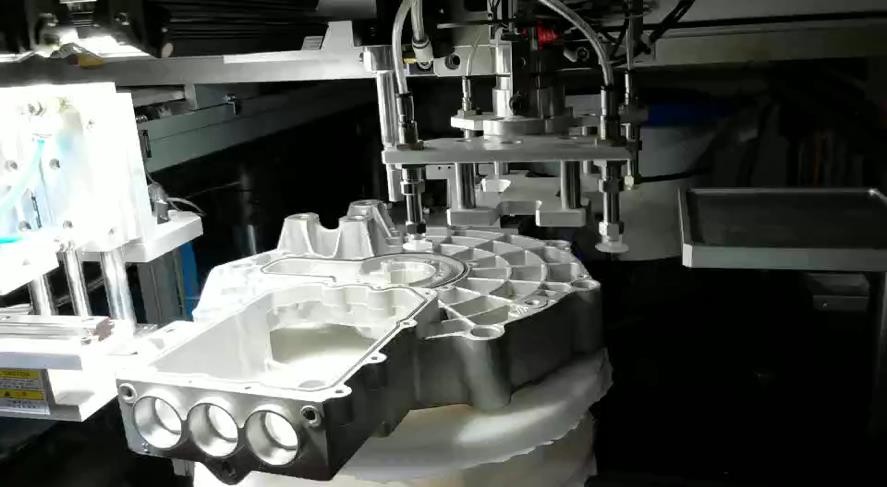
Task: The camera finds the coordinates and angle of the part to pick and of the target, then converts image coordinates into robot coordinates. Hikrobot’s electronics overview names CNC mobile phone hole positioning and FPC and ACF glue alignment with alignment marks. Only the FPC needs adjusting each time, because the ACF glue position is fixed.
Requirements:
- Locate the part’s position and angle accurately.
- Calibrate the image to the robot or machine coordinates.
- Find fixed-shape holes before machining.
- Align parts using marks.
Solution:
- Area scan cameras with VisionMaster: Hikrobot places position guidance in its PC-based solution group.
Use a vision controller when several cameras share one station. For the choice of sensor type, see area scan vs line scan cameras.
JAKA Cobots for Electronics Industry
Automated electronics assembly often needs a robot that is small, precise and quick to redeploy. Cobots fit because they work beside people and are reprogrammed for new products. If the term is new, read what a collaborative robot is.
JAKA lists seven electronics scenarios. The models below come from the typical applications on each JAKA product page. The final choice depends on payload, reach and tooling, and this comparison of JAKA cobot series can help.
Can a Cobot Handle Loading and Unloading in Electronics?
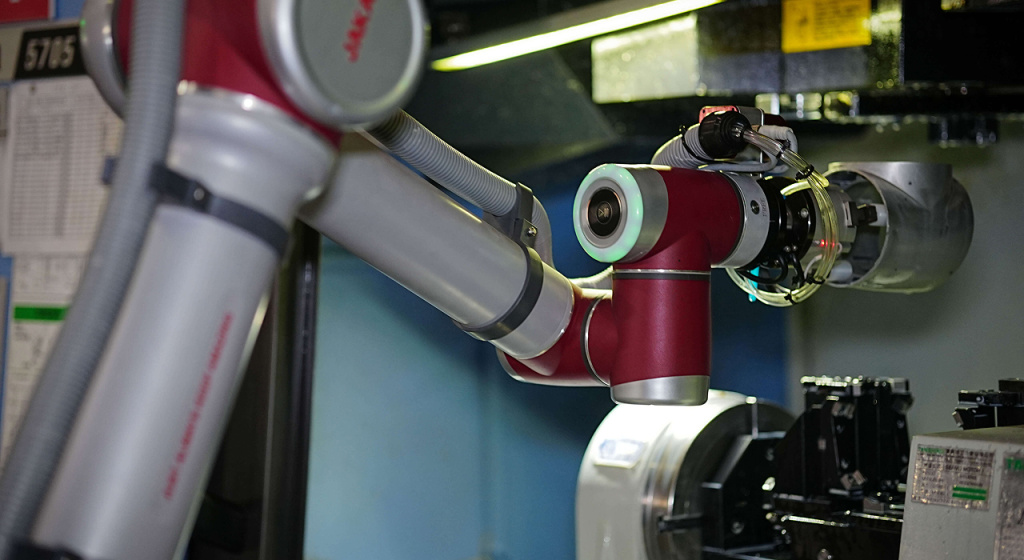
Task: The cobot feeds parts into a machine and removes finished ones.
Requirements:
- Raise efficiency and product quality.
- Redeploy the line quickly.
- Use simple programming to replace manual labor.
Solution: JAKA Zu7 (7 kg payload, 819 mm reach), JAKA Zu12 (12 kg, 1,327 mm), JAKA Zu18 (18 kg, 1,073 mm), JAKA Zu20 (20 kg, 1,780 mm) and JAKA MiniCobo (1 kg, 580 mm) for very light parts.
Can a Cobot Do Screwdriving in Electronics?
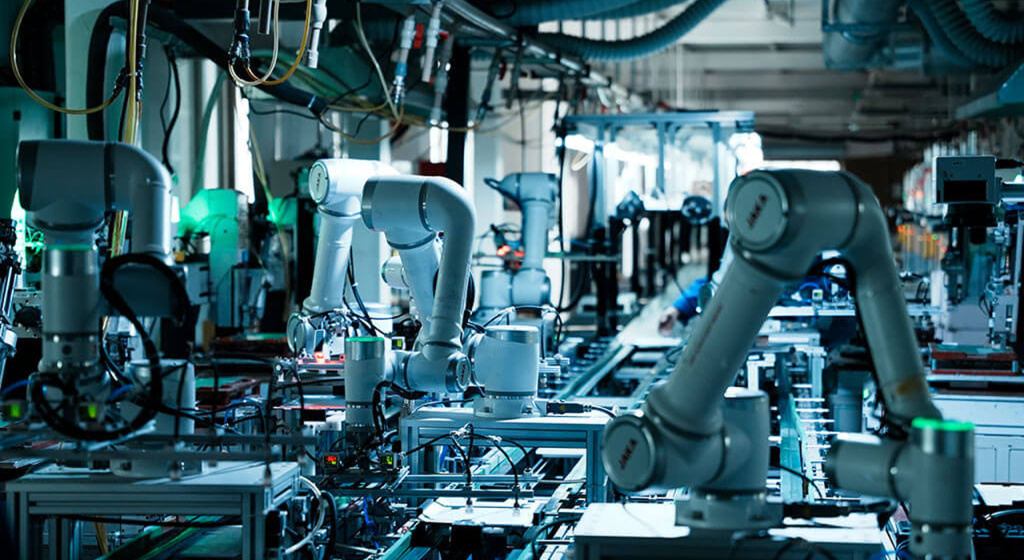
Task: The cobot drives screws at a set torque on each product.
Requirements:
- Run screwdriving with high efficiency, stability and quality.
- Respond quickly.
- Configure the torque range to the product.
Solution: JAKA Zu3 (3 kg, 626 mm), JAKA Zu5 (5 kg, 954 mm) and JAKA Zu7.
Can a Cobot Work as an Electronics Assembly Robot?
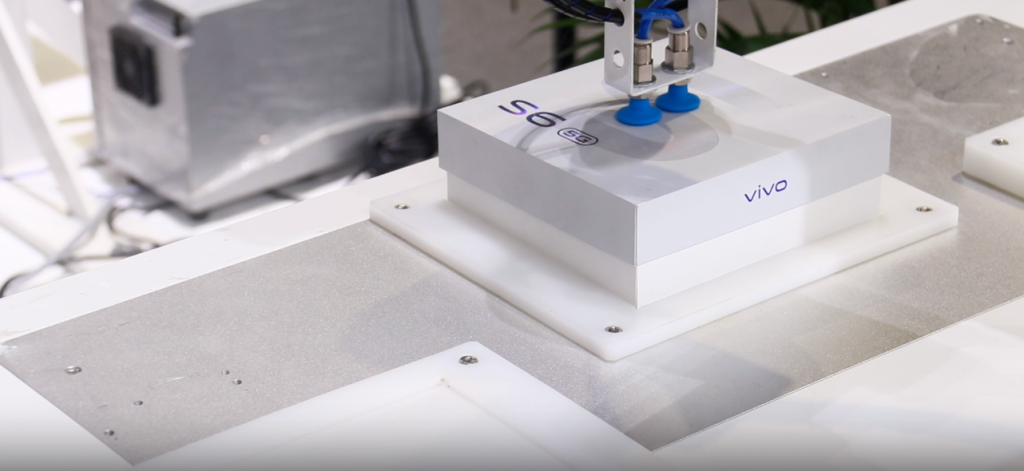
Task: The cobot places and fits components on mixed products.
Requirements:
- Assemble with high precision and adapt to the part.
- Avoid dropping or losing workpieces.
- Support small batches and many variants.
Solution: JAKA Zu5, JAKA Zu7 and JAKA MiniCobo. As an electronics assembly robot, it needs a camera when part positions vary, as in the guidance case above.
Can a Cobot Apply Adhesive in Electronics?
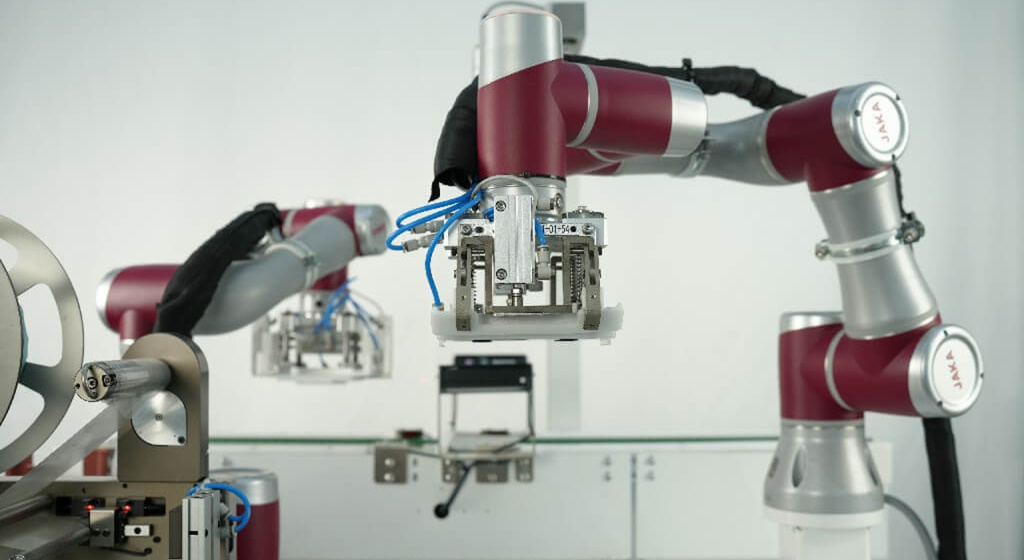
Task: The cobot dispenses adhesive or glue along a path.
Requirements:
- Reprogram easily for different workpieces.
- Keep processing precision consistent and lower the defect rate.
- Keep operators away from hazardous processing equipment.
Solution: JAKA Zu3 and JAKA Zu5, both listed for gluing. JAKA also lists adhesive application for the Zu18.
Can a Cobot Do Flexible Grasping in Electronics?
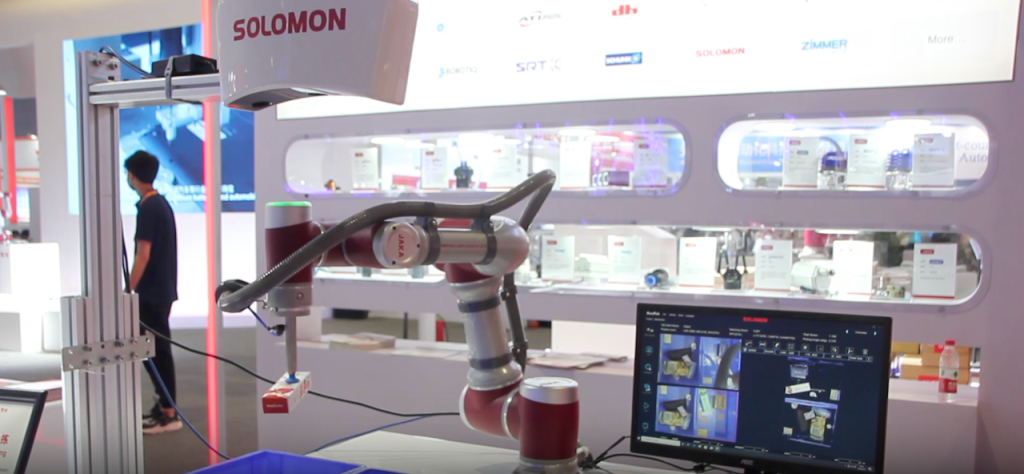
Task: The cobot picks small parts of different shapes and sizes.
Requirements:
- Grasp accurately without losing the workpiece.
- Deploy quickly with a lightweight arm.
- Support small-batch, multi-variety production.
Solution: JAKA Zu3, JAKA Zu5 and JAKA MiniCobo, paired with DH-Robotics electric grippers chosen for the part.
Can a Cobot Inspect Electronic Products?
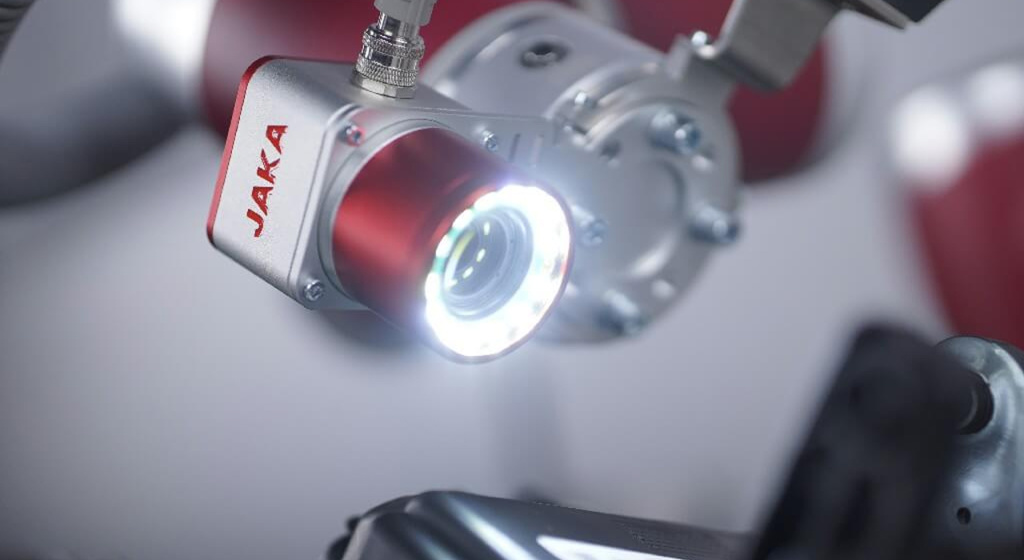
Task: The cobot works together with vision systems and measuring instruments to check parts.
Requirements:
- Integrate with vision systems and measuring instruments.
- Support automated high-precision measurement and non-destructive testing of varied, small-batch parts.
- Replace manual inspection and free workers from repetitive tasks.
Solution: JAKA Zu3, JAKA Zu7, JAKA MiniCobo and JAKA Mini 2 (2 kg, 580 mm). Pair them with the Hikrobot cameras above.
Can a Cobot Sort Electronic Parts?
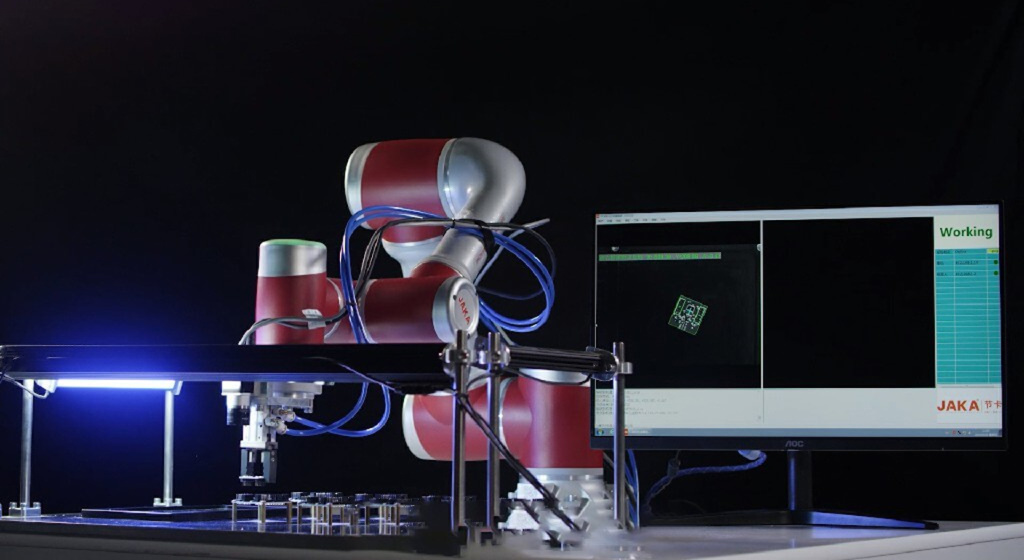
Task: The cobot sorts parts by type or by inspection result.
Requirements:
- Replace manual operators near hazardous equipment.
- Reprogram quickly for different workpieces.
- Keep precision consistent and lower the defect rate.
Solution: JAKA Mini 2 and JAKA MiniCobo. Browse the JAKA Mini series and the larger JAKA Zu series. Guard the cell with SDKELI safety lidar where the risk assessment calls for it.
How Do You Start an Electronics Automation Project?
Start with one station and one measurable problem, then expand.
- Define the failure to prevent. Examples are a scratched display, a missing insert, an unreadable code or a misplaced part.
- Pick the task type. Inspection, counting, identification and guidance point to Hikrobot. Handling, screwdriving, gluing or sorting points to a JAKA cobot.
- Check the physical limits. For vision, note part size, finish, speed and working distance. For a cobot, note part weight, reach and tooling.
- Test on real parts. Run good and bad samples under production lighting.
- Add safety and data. Plan guarding, PLC communication and where results are stored.
The same approach works in other sectors, as shown in our automotive automation guide. Share your part, cycle time and goal when you ask ELVOTEC about automation solutions for electronics.