
News
What Is a Smart Camera? How All-in-One Vision Systems Work
Short answer: A smart camera is a self-contained machine vision device that combines an image sensor, a processor, and input/output connections in a single housing — no separate PC or external controller required. It captures an image and makes a decision (pass/fail, a measurement, a code read) inside the same unit, then sends the result straight to a PLC or robot. A standard industrial camera, by contrast, only captures images; it still needs an external vision controller or PC to process them. In short: a smart camera is the camera and the computer in one.
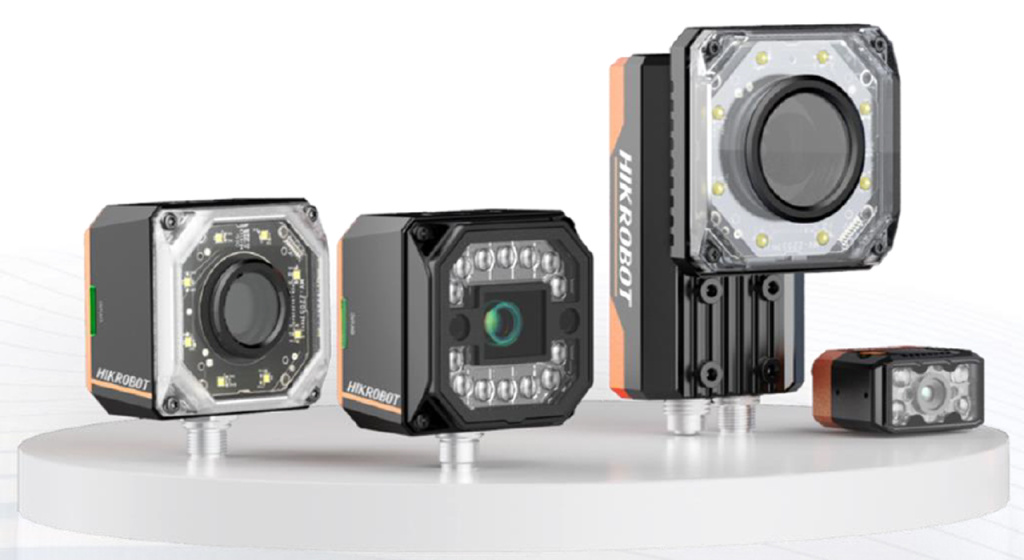
What Is a Smart Camera?
A smart camera — also called an intelligent camera or, in its simpler forms, a vision sensor — is a machine vision device with the image sensor, processing hardware, and communication interfaces built into one compact unit. Instead of streaming raw images to a separate computer, it runs the inspection logic on board and outputs a result directly.
This "all-in-one" design is what defines the category, according to the standard reference on the topic on Wikipedia. Hikrobot's smart camera lineup follows the same principle, packaging imaging and processing into a single device that connects directly to a PLC or line controller. That's the core trade-off: less flexibility than a full PC-based setup, but far simpler installation, wiring, and maintenance.
How Does a Smart Camera Work?
A smart camera works by capturing an image, processing it on board, and outputting a decision — all inside one device, in a fraction of a second. The typical sequence is: a trigger fires, the sensor captures a frame, onboard software runs the configured inspection tool (a presence check, a measurement, a code read), and the result goes out over digital I/O or a network interface to a PLC (programmable logic controller), a robot controller, or a line indicator light.
Because the processing happens locally rather than over a network to a remote PC, response time stays short and consistent, which matters on fast-moving production lines where a delayed decision means a missed part. Most models also include onboard memory for storing several inspection "recipes," so the same camera can switch between product variants without reprogramming from scratch.
What's the Difference Between a Smart Camera and a Vision Sensor?
The line between the two has blurred in recent years, but the core difference is flexibility. A vision sensor is built to do a narrow, fixed set of tasks — presence checks, simple counting — well, with little configuration needed. A smart camera covers the same ground but with more processing power, higher resolutions, and the ability to run multiple inspection tools and logic functions, often with interchangeable lenses. The table below places both against a full PC-based vision system.
Vision Sensor vs. Smart Camera vs. PC-Based Vision System
| Factor | Vision Sensor | Smart Camera | PC-Based Vision System |
|---|---|---|---|
| Architecture | Fixed, single-purpose sensor | Camera and processor in one unit | Separate camera(s), controller/PC, and software |
| Flexibility | Low — narrow task set | Moderate — multiple tools, one camera | High — multiple cameras, full customization |
| Setup complexity | Minimal, little configuration | Moderate, some engineering | Higher, needs integration expertise |
| Best for | Simple, single-station checks | Standalone inspection stations | Complex, multi-camera, evolving applications |
None of the three is universally "better" — each fits a different scale of problem. A single inspection point rarely needs a full PC-based system, and a complex, multi-camera line rarely fits inside one smart camera. Matching the architecture to the actual task is what keeps a vision project both affordable and maintainable.
Smart Camera vs. Industrial Camera: What's the Difference?
The difference comes down to where the processing happens. An industrial camera — like Hikrobot's area scan camera lineup — only captures images; it still needs a separate vision controller or PC running vision software to turn those images into a decision. A smart camera skips that extra hardware layer by building the processor directly into the camera housing.
The trade-off runs both ways: an industrial camera paired with an external controller generally offers more processing power, supports multiple cameras at once, and scales better for complex or high-resolution work — the same category of camera compared in more detail in our area scan vs. line scan camera guide.
What Are Smart Cameras Used For? (Smart Camera Applications)
Smart camera applications center on inspection tasks that fit within a single camera's field of view and don't require multi-camera coordination. Typical tasks include:
- Presence/absence detection and assembly verification
- Object positioning and counting
- Surface defect detection
- Dimensional measurement
- 1D/2D code and OCR reading, often overlapping with dedicated barcode readers on higher-volume, code-only lines
- Basic robot guidance for pick-and-place tasks
These tasks show up across automotive, electronics, food and beverage, and logistics manufacturing — industries where a single, well-placed inspection camera can catch defects or verify assembly steps without the cost and complexity of a full vision system. For European manufacturers standardizing on one vendor, Hikrobot's smart camera range sits within the same machine vision ecosystem used across its area scan, line scan, and 3D camera lines.
Smart Camera or PC-Based Vision System: Which One Fits Your Line?
Choose a smart camera when you need one inspection point solved quickly — a single station checking one or two features per part, installed and running without a dedicated vision engineer on-site. Choose a PC-based vision system, built around a vision platform or multiple industrial cameras, when the application involves several inspection points, high resolution, or logic that's likely to change as production evolves. Many production lines end up using both: smart cameras at simple, fixed stations, and a full vision system where the inspection is more complex.
As an official Hikrobot distributor, Elvotec can help match the right architecture — smart camera, industrial camera and controller, or a full multi-camera system — to your production line, building on the fundamentals covered in our machine vision guide.
Frequently Asked Questions
Is a smart camera the same as a vision sensor?
Not exactly, though the terms overlap. A vision sensor is typically the simpler, more fixed-function version; a smart camera usually offers more processing power, higher resolution, and the ability to run multiple inspection tools.
Can a smart camera control multiple cameras at once?
No. A smart camera is a single-camera device by design. Applications needing multiple cameras working together require a PC-based vision system with a separate controller.
Is a smart camera powerful enough for complex inspections?
For a single, well-defined task, yes. For applications that combine several inspection steps, high resolution, or frequently changing logic, a PC-based system or an industrial camera paired with a dedicated vision controller offers more headroom.
Does a smart camera need a separate light source?
Some models include built-in lighting for basic tasks, but many applications still pair a smart camera with external lighting for consistent, repeatable results — the same principle used with any machine vision camera.
Can a smart camera read barcodes as well as inspect parts?
Yes, most smart cameras support 1D and 2D code reading alongside inspection tasks, though high-volume, code-only lines are often better served by a dedicated barcode reader built specifically for that job.